Genghis Khan
Introduction
Genghis Khan (1162–1227), born as Temüjin, was the founder and first Great Khan of the Mongol Empire, which became the largest contiguous empire in history after his death. Renowned for his military genius and leadership, Genghis Khan united the nomadic tribes of Northeast Asia and initiated a series of military campaigns that reshaped the political and cultural landscape of Eurasia. His legacy extends beyond his conquests, influencing trade, governance, and cultural integration across the regions he ruled. Genghis Khan's life and achievements have been commemorated in various forms, including rituals, monuments, and cultural traditions, making him a pivotal figure in world history.
Early Life
Genghis Khan was born into the Borjigin clan, a prominent Mongol family, under the name Temüjin. His early life was marked by hardship and adversity. After the death of his father, Yesügei, who was poisoned by rival Tatars, Temüjin's family was abandoned by their tribe and left to fend for themselves. These formative years were crucial in shaping his resilience, resourcefulness, and determination.
Temüjin's rise began with his efforts to unite the fragmented Mongol tribes. He forged alliances through strategic marriages and demonstrated exceptional leadership in battles against rival clans. His ability to inspire loyalty among his followers and his innovative military strategies set the foundation for his future conquests. By 1206, Temüjin had successfully consolidated the Mongol tribes and was proclaimed Genghis Khan, meaning "Universal Ruler," at a kurultai (tribal council).
Expansion of the Mongol Empire
Under Genghis Khan's leadership, the Mongol Empire embarked on a series of conquests that transformed the political and cultural landscape of Eurasia. His campaigns were marked by their scale, speed, and effectiveness, as well as their impact on the regions they targeted.
Genghis Khan's conquests extended to the Jin Dynasty and the Western Xia kingdom. His campaigns against these states showcased his ability to adapt to different terrains and employ innovative siege techniques. The fall of the Jin capital, Zhongdu (modern-day Beijing), in 1215 marked a significant victory.
In addition to his military achievements, Genghis Khan promoted trade and cultural exchange across his empire. He established the Pax Mongolica, a period of relative peace and stability that facilitated the movement of goods, people, and ideas along the Silk Road. This era of connectivity had a profound impact on the development of Eurasian civilizations.
Legacy
Genghis Khan's legacy is multifaceted, encompassing his contributions to governance, culture, and global history. As the founder of the Mongol Empire, he laid the groundwork for one of the most influential empires in history. His administrative reforms, such as the codification of laws in the Yassa, provided a framework for governance that emphasized justice and order.
The Mongol Empire's emphasis on trade and cultural exchange had a lasting impact on the regions it encompassed. The integration of diverse cultures and the promotion of religious tolerance under Genghis Khan's rule fostered a sense of interconnectedness that shaped the course of history. His descendants, including Kublai Khan, continued his legacy by expanding the empire and establishing the Yuan Dynasty.
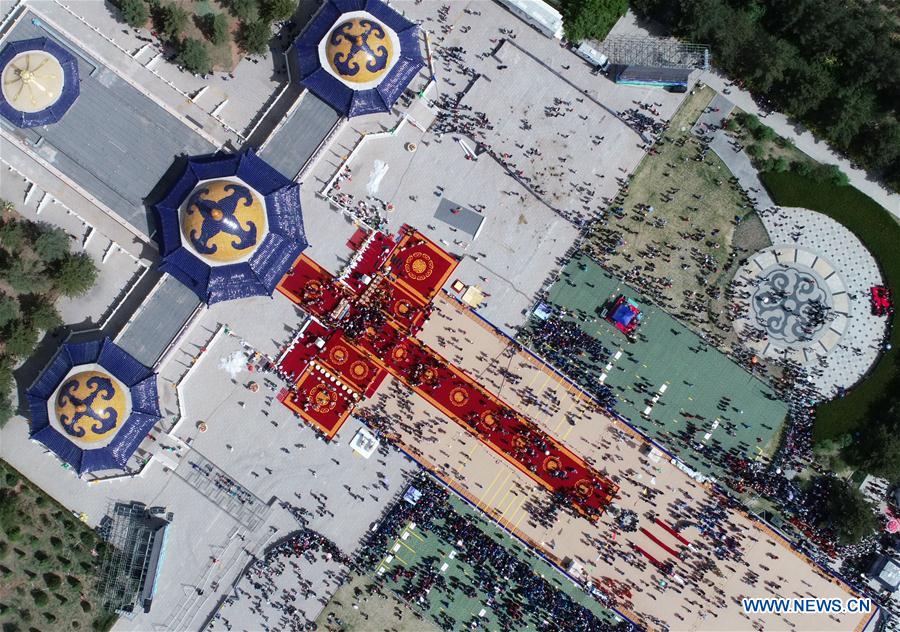
Genghis Khan's influence extends beyond his lifetime, as he remains a symbol of leadership, resilience, and innovation. His story is celebrated in various forms, from historical monuments and rituals to literature and art. The annual memorial rituals held at his mausoleum in Ordos, Inner Mongolia, serve as a testament to his enduring significance in Mongolian culture.
Representation in Popular Culture
Genghis Khan's life and achievements have been depicted in numerous works of popular culture, reflecting his enduring appeal as a historical figure. Films, novels, and documentaries have explored different aspects of his story, from his early struggles to his military conquests and governance.
One notable representation is the film "Genghis Khan," directed by Hasichaolu, which focuses on his early life and rise to power. The movie combines historical elements with fictionalized narratives to provide a compelling portrayal of the young Khan. The use of special effects and cinematography enhances the storytelling, bringing the world of 13th-century Mongolia to life.
In addition to cinematic portrayals, Genghis Khan has been featured in literature, music, and art. His image as a warrior and leader has inspired countless works, highlighting his impact on global history and culture. From traditional Mongolian epics to modern interpretations, Genghis Khan's legacy continues to captivate audiences worldwide.
Overall, Genghis Khan's life and achievements remain a source of fascination and inspiration, reflecting his enduring influence on history and culture. His story serves as a reminder of the power of vision, determination, and leadership in shaping the course of human events.








